Bardet-Biedl Syndrome (BBS) belongs to a group of conditions known as ciliopathies, where the underlying problem lies in tiny hair-like cellular structures called cilia that are essential to the normal function of several organs at once — including the retina, kidneys, and reproductive system. Vision loss is one of the most consistent features, but it exists alongside a broader set of systemic findings that Somali families are usually already managing with local physicians.
Because BBS affects the whole body, the retinal evaluation in India is deliberately scoped: the team reviews existing records for the systemic picture, then concentrates the in-person visit on the eye-specific testing and care planning that requires specialised equipment not typically available locally.
10+
years Experience
years Experience
5000+
Patients treated
Patients treated
100+
Countries served
Countries served
NABH
Guided facility
Guided facility
Symptoms of Bardet–Biedl Syndrome (Ocular)
On the retinal side, BBS produces a rod-cone dystrophy pattern — night blindness that becomes noticeable in early-to-mid childhood, followed by progressive constriction of the visual field into the teenage years, with central vision often affected earlier than in isolated (non-syndromic) retinitis pigmentosa. Beyond the eyes, BBS is commonly associated with extra digits on the hands or feet (polydactyly), obesity beginning in childhood, and reduced kidney function, among other features that are managed by other specialists.
Causes of Bardet–Biedl Syndrome
Mutations across more than twenty identified BBS genes disrupt the normal function of primary cilia, structures found on nearly every cell type in the body, which explains why the syndrome touches so many organ systems simultaneously. Inheritance is autosomal recessive in the large majority of cases
Diagnosis for Somali Patients
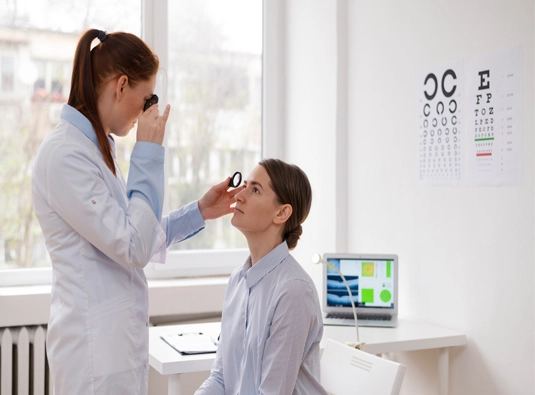
Retinal assessment includes electroretinography, OCT imaging, and visual field testing, with fundus photography used to document the pattern and pace of change over successive visits. Because vision loss in BBS can progress somewhat faster than in non-syndromic RP, a baseline assessment followed by scheduled monitoring is often recommended rather than a single one-time evaluation.
Meet The Team
Our Eye Specialists

Dr. Pawan
Associate Professor, Vitreo-Retina Surgeon. 10+ Years Experience
Retinal disorders, diabetic retinopathy, and advanced retina procedures. Provides diagnostic evaluation and treatment planning for international patients.

Dr.Pallavi
Senior Consultant Ophthalmologist & Eye Surgeon· 26+ yrs experience
Areas of Focus: Cataract surgery, corneal disorders, refractive procedures, and glaucoma management. Provides comprehensive eye care and surgical expertise for global patients.
Dr. Robin
Consultant Ophthalmologist & Eye Surgeon, MD, DO .16+ Years Experience
Areas of Focus: Cataract surgery, corneal disorders, refractive procedures, and glaucoma management. Provides comprehensive eye care and surgical expertise for global patients.
Treatment Approach in India
Regenerative stem cell therapy is discussed as a supportive option for eligible patients, evaluated specifically against the retinal findings rather than the syndrome as a whole. Given the faster typical progression seen in BBS-related retinal disease, the follow-up schedule after returning to Somalia tends to be closer than for isolated RP, and is built around the child or adult’s individual rate of change.
Reviews
What Our Patients Say


DR NAAGALAKSHMI R
2 months ago

Asha Babbar
2 months ago
The overall experience at the RP Treatment Center was very good. The staff was supportive and caring, and we provided proper attention and guidance during treatment. The environment at the center was clean and comfortable. The doctors and staff tried to understand patients' needs and explained the treatment process well.
Overall, I am satisfied with the service and care. Highly recommended!
Overall, I am satisfied with the service and care. Highly recommended!

Harshita Kapoor
2 months ago
Life‑Changing Experience with RP Therapy”
After years of struggling with vision loss due to Retinitis Pigmentosa, I finally found hope here. The doctors were highly professional, explained the stem cell treatment in detail, and gave me confidence at every step. The therapy was smooth, and I’ve already noticed positive changes in my daily life. Their dedication, care, and advanced medical approach make this center truly trustworthy
After years of struggling with vision loss due to Retinitis Pigmentosa, I finally found hope here. The doctors were highly professional, explained the stem cell treatment in detail, and gave me confidence at every step. The therapy was smooth, and I’ve already noticed positive changes in my daily life. Their dedication, care, and advanced medical approach make this center truly trustworthy

Yash Chauhan
2 months ago
I had a really good experience at RP Treatment Centre. The doctor listened to my problem patiently and explained the treatment in a simple way. The staff was polite and the clinic was clean. I started feeling better after the treatment. Highly recommended!

pragya chauhan
2 months ago
Very satisfied with the service. The doctor is experienced and gives proper attention to every patient. The staff is friendly, and the overall environment is comfortable. Thank you, RP Treatment Centre, for the excellent care.

Manisha kapoor
2 months ago
I had been struggling with Retinitis Pigmentosa for years, and finding this center was truly life‑changing. The doctors provided a thorough medical evaluation and explained every step of the stem cell therapy process with clarity. The treatment was smooth, professional, and I noticed encouraging improvements in my vision within weeks. Their continuous follow‑up care and compassionate support made me feel confident throughout the journey. Highly recommended for anyone seeking advanced RP treatment in India.
Frequently Asked Questions
Will treating the eyes help with the other features of BBS, like weight or kidney function?
“No — our evaluation and any retinal treatment address the eye component specifically. The systemic features of BBS, including weight management and kidney monitoring, need to continue under the relevant specialists managing those aspects, ideally with information shared between teams.”
Does BBS cause faster vision loss than typical retinitis pigmentosa?
”
In many cases, yes — central vision tends to be affected somewhat earlier in BBS compared with non-syndromic RP, which is one reason we generally recommend closer monitoring intervals for BBS patients.”
Our child has BBS but no vision complaints yet — is an eye evaluation still worth it?
“Yes. Establishing a baseline ERG and OCT before symptoms are noticeable makes it far easier to detect and measure any change at future visits, and to plan low-vision support proactively rather than reactively.”
Do you need our child’s full medical records from Somalia, or just the eye reports?
“Sharing the broader medical picture — not just prior eye reports — helps the team understand the full context of the syndrome, even though the in-person visit itself is focused on retinal evaluation and care.”