
15 Sep RP in Children: Diagnosis, School Support & Parental Guidance
Medically reviewed by Dr. Prashant Tyagi (Stem Cell Biotechnology Specialist, 10+ years) and Dr. Pallavee Senior Consultant | Ophthalmologist & Eye Surgeon 22+ Years Experience
Learning that your child has retinitis pigmentosa (RP) can feel overwhelming. As a progressive, inherited condition affecting the retina, RP raises many questions about what to expect, how to support your child’s education, and how to plan for the years ahead. Here’s a practical guide for parents navigating a new diagnosis.
How RP Is Diagnosed in Children
RP often first shows up as difficulty seeing in dim light or at night, though young children may not describe this clearly — parents might instead notice clumsiness at dusk or reluctance to play outside as it gets darker. Diagnosis typically involves:
- A detailed family history, since RP is usually inherited (autosomal recessive, dominant, or X-linked patterns are all possible)
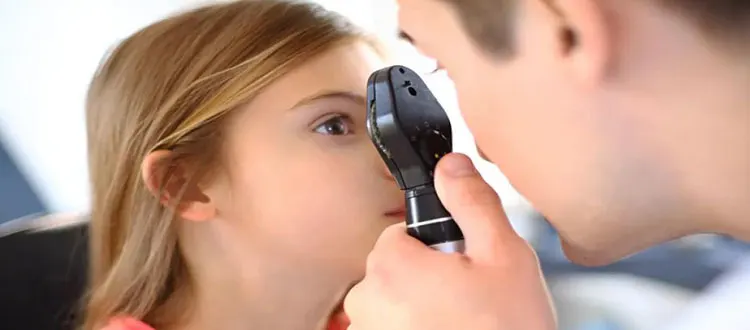
- Dilated fundus examination to look for characteristic pigment changes in the retina
- Electroretinogram (ERG) – measures the retina’s electrical response to light, often the most useful test for confirming RP, even before visible changes appear
- Visual field testing – assessing peripheral vision, adapted for the child’s age
- Optical Coherence Tomography (OCT) – detailed imaging of retinal structure
- Genetic testing – increasingly used to confirm the specific gene involved, which can inform prognosis and future treatment eligibility, including gene therapy trials for certain RP subtypes
What Progression Typically Looks Like
RP usually progresses gradually over years to decades, though the pace varies significantly based on the underlying genetic cause. Common early signs in children include:
- Night blindness – difficulty seeing in low light, often the first noticeable symptom
- Peripheral vision loss – gradually narrowing side vision, sometimes described by older children as “tunnel vision”
- Slower adaptation when moving between bright and dim environments
- Central vision is typically preserved much longer, though this varies by RP type
Because progression is usually slow, many children with RP continue to have useful vision well into adulthood — early diagnosis is about planning and support, not immediate crisis.
Supporting Your Child at School
A few thoughtful accommodations can make a significant difference:
- Inform the school early and request a formal vision assessment through the school’s special education or disability services
- Preferential seating – near the front of the classroom, away from glare
- Lighting adjustments – some children with RP see better with brighter, evenly distributed lighting; others are sensitive to glare, so individual assessment matters
- Extra time for visually demanding tasks, especially in low-light or high-contrast situations
- Orientation and mobility training to help with navigating hallways, stairs, and outdoor spaces confidently, particularly as peripheral vision narrows
- Assistive technology – large-print materials, screen readers, or magnification tools as needed, introduced gradually and matched to your child’s current vision
- Regular communication between family, teachers, and a low-vision specialist to adjust support as vision changes over time
Involving a teacher of the visually impaired (TVI), where available, can be enormously helpful for creating and monitoring a consistent support plan.
Emotional and Social Support
RP affects not just vision but how a child sees themselves and interacts socially:
- Encourage open conversations about RP in age-appropriate language, and let your child ask questions as they arise
- Connect with peer support groups or organizations for children with visual impairment — meeting others with similar experiences can reduce feelings of isolation
- Watch for signs of anxiety or withdrawal, especially as symptoms become more noticeable to peers, and involve a counselor or psychologist if needed
- Celebrate your child’s strengths and interests without letting the diagnosis become the sole focus of their identity
Genetic Counseling for the Family
Because RP is usually inherited, genetic counseling is valuable for:
- Understanding the inheritance pattern and risk for siblings or future children
- Identifying carrier status in family members
- Determining eligibility for gene-specific clinical trials or approved gene therapies, which now exist for certain RP-related genes
The Bottom Line
A childhood RP diagnosis is significant, but with early diagnosis, the right school accommodations, and ongoing emotional support, children with RP can thrive academically and socially. Building a care team — ophthalmologist, low-vision specialist, genetic counselor, and school support staff — early on gives your child the best foundation as their needs evolve over time.
Medical & Government References
- National Eye Institute (NEI), NIH – Retinitis Pigmentosa overview
- NIH – Genetic and Rare Diseases Information Center (GARD) – Retinitis Pigmentosa
Related Readings

Sorry, the comment form is closed at this time.