13 Oct Stem Cell Therapy for Retinitis Pigmentosa in India: A Patient’s Guide to Research, Safety and Practical Planning
Last updated: 13 October 2026 | Author: Prashant Tyagi (Stem Cell Biotechnology Specialist, 10+ years) and Dr. Pallavee Senior Consultant | Ophthalmologist & Eye Surgeon 22+ Years Experience
If you or a family member has retinitis pigmentosa (RP), you may have come across stem cell therapy for retinitis pigmentosa in India while looking for options. This guide focuses on the practical questions: what the therapy is meant to do, what the evidence currently says, how it is regulated in India, and how to plan responsibly if you decide to explore it. It does not offer a cure, because a proven cure for most forms of RP does not yet exist.
Quick Navigation
- Understanding retinitis pigmentosa
- What stem cell therapy aims to do
- What the evidence says today
- Established vs investigational
- Regulation in India
- Planning your evaluation
- Cost and travel
- Risks and limits
- Checklist before you commit
Understanding Retinitis Pigmentosa
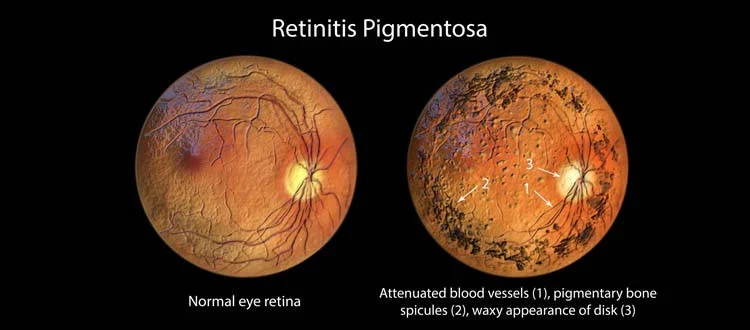
RP is an inherited group of retinal diseases that gradually affects rod cells, then cone cells. Early signs include difficulty seeing in dim light and loss of peripheral vision. It progresses at different speeds, and some people retain useful central vision for many years. Our retinitis pigmentosa page explains the condition, and related pages cover Usher syndrome, rod-cone dystrophy and Leber congenital amaurosis.
What Stem Cell Therapy Aims to Do
The idea behind stem cell approaches is to slow the loss of remaining retinal cells or to support the retinal environment, and, in some research settings, to replace damaged cells. Different cell sources are being studied, and the way cells are delivered also differs between studies. These are research goals, not guaranteed outcomes for any individual patient.
What the Evidence Says Today
Early clinical studies suggest some stem cell approaches can be delivered with acceptable safety in carefully selected patients, but evidence that they reliably improve vision is limited, and results between studies and between individuals vary. Larger, well-controlled trials are still needed. Be cautious of any source that quotes a single success percentage without explaining who was treated, how results were measured and over what period.
Established vs Investigational
| Approach | Status | What to know |
|---|---|---|
| Regular retina specialist follow-up, management of cataract or macular swelling | Standard care | Helps maintain best possible vision |
| Genetic testing and counselling | Standard, where available | Identifies the gene and trial eligibility |
| Gene therapy for confirmed RPE65-related disease | Approved in some countries for a small group | Availability varies; confirm locally |
| Stem cell therapy for RP | Investigational | Should follow Indian research and ethics rules; benefit not proven |
Regulation in India
In India, stem cell research is guided by the National Guidelines for Stem Cell Research (ICMR and DBT), and cell-based products fall under the oversight of CDSCO as new drugs. Use outside approved indications is expected to take place within ethics-approved research. You can check whether a trial is registered on CTRI. Ask any provider which approvals apply to the treatment they are describing.
Planning Your Evaluation
- Gather records: visual field tests, OCT scans, electroretinography (ERG) reports, genetic reports and your doctor’s notes.
- Get a clear explanation: request a written summary of the treatment goals, risks and alternatives.
- Involve your own eye doctor: share the plan with the retina specialist who knows your history.
- Decide without pressure: avoid offers that depend on paying immediately or that promise results.
Our retinitis pigmentosa treatment in India page describes how we handle evaluation, and you can read more about us.
Cost and Travel
Total cost depends on the evaluation, the protocol, the number of sessions, hospital stay, medicines and travel. Always ask for an itemised written estimate, and be wary of unusually low prices or guaranteed packages. If you travel from another country, check visa rules, local accommodation and how follow-up will be arranged after you return home.
Risks and Limits
Possible risks include infection, bleeding, inflammation, raised eye pressure or retinal detachment, depending on the procedure. With investigational therapy, the larger limit is uncertainty: vision may remain unchanged, change slightly, or continue to decline. Stem cell therapy is not an approved standard treatment for RP, and no provider can guarantee improvement.
Checklist Before You Commit
- Do I have a confirmed diagnosis, and has genetic testing been considered?
- Is the treatment part of registered research or offered as an investigational service, and under what approval?
- Which cells are used, and how are they prepared and tested?
- What results have been documented, and how were they measured?
- Is informed consent written, with risks clearly stated?
- Is the full cost in writing, and is follow-up included?
- Does my own retina specialist know about the plan?
Learn More
Explore related pages on night blindness diagnosis, cone dystrophy and Bardet-Biedl syndrome, read the blog, or contact us to discuss your reports.
More Official Sources
- National Eye Institute (NEI)
- ClinicalTrials.gov
- Clinical Trials Registry – India (CTRI)
- Indian Council of Medical Research (ICMR)
- Central Drugs Standard Control Organisation (CDSCO)
- Overview of the National Guidelines for Stem Cell Research 2017 (PubMed Central)

No Comments